

The most suitable trust for a child depends on when you want them to benefit and how much control trustees should have. If you’re considering how to set up a trust for a minor, weigh these decisions before choosing a structure. In England and Wales, a child with a bare trust generally becomes entitled to the assets at 18, which may be earlier than you intend.
A trust can hold assets for a child while setting out how trustees may manage and use them. The choice of structure affects when the child can access the assets, what decisions trustees can make and which tax or registration responsibilities may apply.
This guide compares bare, discretionary and statutory trusts, and explains the decisions to make about beneficiaries, trustees and access to assets. It also covers practical steps for setting up a trust and how a trust in a will can fit into wider estate planning. The legal position differs in Scotland and Northern Ireland, so the relevant jurisdiction matters when planning.
Key Takeaways
- Choose a trust by considering when the child should benefit, how much control trustees need and whether the child should receive the assets at 18.
- Compare bare, discretionary and statutory trusts to understand how each affects beneficiary rights and trustee decisions.
- A trust can provide structured management, but it also brings trustee responsibilities and may involve tax or registration requirements.
- To plan how to set up a trust for a minor, define its purpose, choose trustees and specify how and when assets may be used.
- Coordinate the trust with your will and wider estate plan, taking account of your family’s circumstances and the relevant legal jurisdiction.
How a trust for a minor works and what it is designed to do
A trust is an arrangement in which trustees hold or manage assets according to written terms for the benefit of one or more beneficiaries. In England and Wales, a minor is generally someone under 18. The legal position and the meaning of adulthood can differ across the UK, particularly in Scotland, so consider which jurisdiction applies to the arrangements.
A trust can specify who manages assets, what they may be used for and when a child can receive them. It doesn’t automatically reduce tax, remove investment risk or protect assets in every circumstance. Its effects depend on the trust’s terms, the assets involved and the law that applies. A trust created during someone’s lifetime can begin operating once it is properly established and assets are transferred. A trust in a will generally takes effect after the will-maker’s death, as part of administering their estate.
Who is involved in a trust for a child?
The settlor creates the trust and provides or directs assets into it. The trustees manage those assets in line with the trust document and their applicable duties. The beneficiary is the child, or another person, for whose benefit the trust is established. A parent may be the settlor, a trustee, both or neither. Being a parent alone doesn’t make someone a trustee; the legal roles depend on how the arrangement is created.
Trustees need to understand their powers, how they should use the assets and who is entitled to benefit. For example, the terms might allow funds to be used for a child’s education or maintenance, while setting a separate age or condition for receiving capital. A Discretionary Trust gives trustees discretion over distributions within the rules of the trust, rather than giving each potential beneficiary an automatic fixed share.
What does setting up the trust actually involve?
Setting up a trust for a minor means defining its purpose, choosing a suitable structure and trustees, identifying the assets, and recording how and when those assets may be used or distributed. A trust deed usually records a lifetime arrangement. For a trust intended to begin on death, the terms are included in the will. Clear drafting helps trustees understand the settlor’s intentions, while ensuring they act within the powers and duties that apply.
Begin with the practical aim. You might want trustees to manage savings until a child reaches a chosen age, or to decide how funds should support the child as their needs arise. Choose a structure to fit that aim, rather than selecting one based on its name alone. Consider whether the child should have a fixed entitlement, how much discretion trustees need and what should happen if a trustee can no longer act.
Then consider the assets and administration. Transferring assets into a trust can have legal and tax consequences, and trustees may have record-keeping, reporting or registration responsibilities. Tax treatment varies by trust type and circumstances. Particular rules can apply when a parent creates a trust for their child. A trust provides a framework for stewardship and timing, not a guarantee of a particular financial outcome.
Which trust structure may suit a minor: bare, discretionary or statutory?
The right structure depends on the balance you want between a child’s fixed entitlement and the trustees’ ability to respond to their needs. Compare how each option deals with access, decision-making and the intended purpose. The GOV.UK guide to types of trusts also outlines how common trust forms work.
| Structure | Control and access | Trustee discretion | Typical planning purpose |
|---|---|---|---|
| Bare trust | The child has an absolute interest in the assets. In England and Wales, they can generally take control at 18. | Limited. Trustees manage the assets but don’t decide who is entitled to them. | Holding a gift for a child where entitlement at 18 is acceptable. |
| Discretionary trust | Potential beneficiaries don’t have a fixed right to a particular share unless and until trustees distribute assets under the terms. | Greater, but confined by the trust deed and trustees’ duties. | Allowing trustees to consider changing needs and decide when and how to provide benefit. |
| Statutory child-beneficiary trust | Access and timing depend on the specific statutory arrangement and qualifying circumstances. | Set by the applicable law and the trust terms. | Providing for a child who inherits from a deceased parent, where statutory conditions are met. |
A bare trust is comparatively straightforward to understand: the beneficiary is entitled to the trust assets, even though trustees look after them while the child is underage. The key planning point is that, in England and Wales, the beneficiary can generally demand the assets at 18. That may not suit a family that wants trustees to manage the assets for longer. Legal rules differ across the UK.
When might a bare trust be considered?
A bare trust may suit a straightforward gift where the child’s eventual ownership is intended and control at 18 is appropriate. It offers less flexibility than a discretionary arrangement because trustees cannot choose a different beneficiary or delay the beneficiary’s entitlement simply because they feel the child isn’t ready. Read more about how bare trusts work when weighing this option.
When might a discretionary or statutory trust be considered?
A discretionary trust may suit an arrangement where trustees need to weigh a child’s circumstances before making distributions. They can use discretion only within the trust’s terms and their duties; it isn’t an unrestricted power. The key distinction is that potential beneficiaries don’t have a fixed entitlement to a particular share before trustees decide to distribute assets.
Bereaved-minor and 18-25 trusts are specific statutory arrangements, not general alternatives available for every child. They have qualifying conditions and rules about when a beneficiary may receive the assets, so eligibility and drafting need legal review. If you’re deciding how to set up a trust for a minor, consider how the structure will deliver the outcome you want. A trust planning consultation can help you discuss the available structures and your family’s intentions.
Is a trust always the right choice for a minor?
No. A trust can provide a clear framework for managing assets, but it also creates responsibilities and isn’t automatically preferable to giving a child a gift outright. The right choice depends on the purpose of the gift, the child’s expected needs and the level of control you want trustees to have.
For a modest gift intended for a child’s immediate benefit, the extra administration of a trust may not be proportionate. A trust may be more relevant if you want assets managed over time or distributions to depend on the child’s circumstances. Trustees must follow the trust terms, keep appropriate records and deal with any reporting or tax obligations that apply. Their responsibilities continue for as long as the trust requires their involvement.
What should families weigh before creating a trust?
Start with the outcome you want. Consider when the child should benefit, whether they should have a fixed entitlement and how much discretion trustees may need. Then weigh that purpose against the assets involved and the practical demands of administering them. The Law Society’s overview of trusts provides useful general background. The trust terms should still reflect your family arrangements.
A trust shouldn’t be treated as a guaranteed way to save tax or protect assets. Its legal and financial effects depend on how it is created, what it holds and the circumstances of the people involved. If your main aim is to delay a child’s access, check that the chosen structure allows for that, and take account of the duties and administration involved.
What tax and registration duties may apply?
Trust tax treatment depends on the structure and facts. Income tax, capital gains tax and inheritance tax may each need consideration, but the rules aren’t identical for every trust. The tax position can depend on the type of trust, the assets, who created it and who benefits. A parent creating a trust for a minor child should take particular care: special rules can attribute certain trust income to the parent, subject to conditions and exceptions. Check the relevant HMRC thresholds and circumstances against current guidance before assets are transferred.
Trustees may also need to consider whether the arrangement must be registered with HMRC’s Trust Registration Service. Registration requirements depend on the trust’s circumstances and can change, so trustees should establish what applies and keep the position under review. Don’t assume that every trust has the same filing duties, or that a trust with no immediate tax bill has no registration or reporting obligations.
These considerations are part of deciding how to set up a trust for a minor. Careful drafting can connect your family’s intentions with the trust’s terms and trustee roles. Patrick D Williams Estate Planners offers a free 15-minute consultation by Zoom, Teams or in person to discuss your estate-planning priorities.
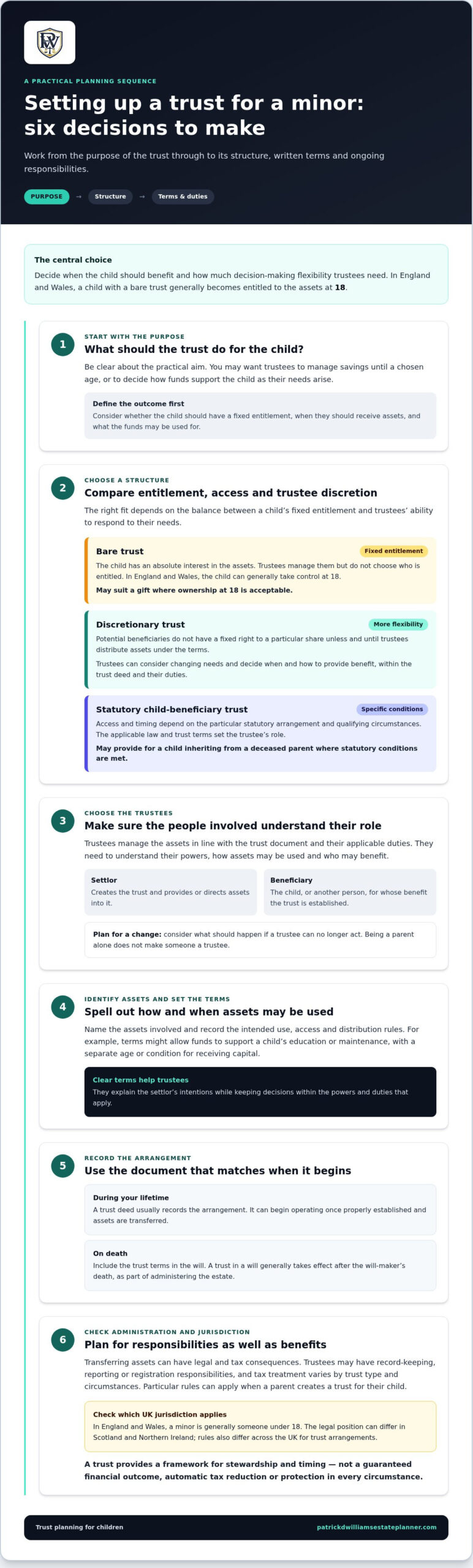
How to set up a trust for a minor: practical steps
Setting up a trust involves more than choosing a name for the arrangement. Define what it should achieve, decide who will manage it and make sure the written terms match your intentions. The process also differs depending on whether assets are placed into a trust during your lifetime or the trust is created through your will after your death.
Decide the purpose, trustees and terms
Start by recording what the trust should provide for the child and when they may benefit. Consider who could act as trustee, whether they can manage the responsibilities over time and how a replacement would be appointed. Clear terms help trustees understand which decisions they can make and the limits of their authority.
- Define the purpose. Identify the assets intended for the child and what the trust should help provide, such as support during childhood or access at a specified stage. Be clear about whether the child should have a fixed entitlement or whether trustees should decide when distributions are appropriate.
- Choose the route. A lifetime settlement is established during the settlor’s lifetime, with assets transferred into the arrangement. A will trust is written into a will and generally takes effect after the will-maker’s death. The choice affects when the trust begins and how it fits with the rest of the estate plan.
- Select trustees. Choose people who can understand the trust terms, make considered decisions and keep proper records. Discuss the role with proposed trustees so they understand the expected commitment. Consider how decisions will be made, how reasonable expenses will be handled and what happens if a trustee can no longer act.
- Set out the terms. Specify the beneficiaries, trustee powers, how income and capital should be treated, and the conditions for distributions. For example, the document could distinguish between using funds for a child’s needs and distributing capital at a later point. The wording should guide trustees clearly while expressing the family’s intentions.
- Identify and transfer assets. List the intended assets and establish how each will be held by the trustees. The practical transfer process can depend on the asset type. Make sure the trust documentation and associated records accurately reflect what has been placed into the arrangement.
Document, fund and administer the trust
The appropriate trust deed or will provisions depend on the chosen arrangement. Professional drafting can align the legal terms with family intentions and clarify trustee powers, distributions and replacement arrangements. A will trust should also be coordinated with the rest of the will so its provisions work together.
Before and after establishing the trust, establish which HMRC requirements apply to its circumstances. These may include tax returns, Trust Registration Service registration and ongoing record-keeping. Don’t assume that one set of requirements applies to every trust. Trustees should retain the governing document, asset records, decisions and relevant tax information, then review the arrangement if family circumstances or the assets change.
Patrick D Williams Estate Planners provides trust-establishment support to help coordinate trust terms with your wider estate planning. Explore trust planning guidance.
Plan a trust for a minor as part of your family estate planning
A trust for a child should fit into a wider plan for what happens to your estate, rather than sit separately from your will and trustee appointments. The documents need to work together: the will should direct assets into the intended arrangement, name the people responsible for administering it and explain how the child is to benefit. Drafting should reflect your family’s intentions, the assets involved and your circumstances.
When should a trust be coordinated with a will?
If you want a trust to take effect through your will, its provisions should clearly identify the beneficiaries, appoint trustees and set out when and how trustees may distribute or use assets. Naming suitable trustees in the will helps establish who will carry out those responsibilities. Reviewing the will as a whole also helps ensure the trust provisions fit with the intended distribution of the rest of your estate.
Trust planning and appointing guardians address different matters. A trust sets out how assets are held and managed for a beneficiary. A guardian appointment concerns who will care for a child if they are under 18 when you die. One provision doesn’t replace the other, so consider both when planning for a child’s future.
The purpose of each trust matters, too. A trust intended to manage assets for a minor has a different planning focus from a property protection trust, which is designed around property and estate-planning considerations. Property protection trust guidance can help explain that distinction. If you’re considering a will, professional will-writing guidance can help you approach the wider document.
A measured next step for families considering a trust
Before discussing an arrangement, note the outcome you want for the child, the assets you may wish to include and the people you are considering as trustees. It can also help to think through when the child should benefit, what trustees may need to decide and how the trust should fit with your existing will. These points give the discussion a clear starting place without requiring you to settle every detail in advance.
Patrick D Williams Estate Planners provides will writing and trust-establishment support, with drafting shaped around the family’s intentions and circumstances. If you’re exploring how to set up a trust for a minor, a free 15-minute consultation by Zoom, Teams or in person offers an opportunity to discuss your planning priorities and possible next steps.
Take the next step with a clear plan
Deciding how to set up a trust for a minor is about making arrangements that reflect your intentions for the child and can be carried out clearly. Before moving forward, consider what you want the assets to provide, who you trust to manage them and how the plan should fit with your will. These priorities give you a practical starting point, without assuming one structure suits every family.
Patrick D Williams Estate Planners provides will writing and trust-establishment support for clients across the UK. A free 15-minute consultation by Zoom, Teams or in person gives you the opportunity to discuss your circumstances and consider the next steps.
Arrange a free 15-minute estate-planning consultation to discuss a trust plan that reflects what matters to your family.
Frequently Asked Questions
Can a parent set up a trust for their child in the UK?
Yes, a parent can arrange a trust for a child, but the structure, documents and tax treatment depend on the circumstances. A lifetime arrangement is established during the parent’s life, while a will can provide for a trust to arise after their death. Parental settlements may trigger specific income-tax rules. Before transferring assets, review current HMRC guidance for the proposed arrangement and consider how the terms fit the family’s intentions.
At what age can a child access money held in a bare trust?
In England and Wales, a beneficiary with an absolute entitlement under a bare trust generally becomes entitled to control the assets at 18. This matters if the family expects the money to remain managed for longer, since trustees generally can’t postpone an absolute entitlement simply because they think the beneficiary isn’t ready. Don’t assume the same age applies to every trust or jurisdiction. Review the trust document and applicable law before relying on a particular access age.
Do trustees have to register a trust for a minor with HMRC?
Not every trust has the same registration requirements. Some must be registered with HMRC’s Trust Registration Service, while exemptions and obligations depend on the trust’s structure and circumstances. Trustees should establish whether the specific arrangement needs registration and whether tax reporting also applies. They should follow current HMRC guidance and keep required registration details and tax records accurate if the trust’s circumstances change.
Can grandparents set up a trust for a grandchild?
Yes, a grandparent may arrange a trust for a grandchild, with terms and trustees chosen to reflect the intended benefit. For instance, they may want assets managed until the child reaches a chosen stage, or trustees to consider requests for support. Tax treatment can differ according to who provides the assets and how the trust is structured. Before making a settlement, consider the access age, trustee responsibilities and ongoing administration as well as the gift itself.
What happens to trust assets when a minor turns 18?
It depends on the trust structure and its governing document. In England and Wales, a beneficiary with an absolute interest may become entitled to control the assets at 18. Under other arrangements, trustees may have discretion over distributions, or statutory conditions may determine access. Turning 18 doesn’t create one universal outcome for every child’s trust. Trustees and families should refer to the governing document and applicable law to understand what happens next.
Can a trust for a minor be created in a will?
Yes, a will can provide for a trust to arise after the will-maker’s death, subject to the wording and legal effect of the document. This differs from transferring assets into a trust during life. The will should identify the intended beneficiaries, appoint trustees and explain how assets may be used or distributed. Coordinating those provisions with the rest of the will helps ensure the intended arrangement is clearly expressed and can be administered as planned.
Are trusts for children automatically tax-free?
No, trusts for children aren’t automatically tax-free. Income tax, capital gains tax and inheritance tax treatment can depend on the trust type, assets, settlor and beneficiaries. For example, a parent’s settlement for a minor may be subject to specific rules that don’t apply in the same way to every arrangement. Don’t rely on a general example as personal tax advice. Review current HMRC guidance and obtain advice based on the proposed trust before assets are transferred.
Leave a Reply