

The order of an executor’s tasks matters as much as the tasks themselves. An executor duties checklist can help you work through each stage in a clear sequence, from securing the estate to distributing it in line with the will.
It’s understandable to feel unsure about what comes first, particularly when you’re identifying assets, dealing with debts and tax, and keeping beneficiaries informed. Executors have important responsibilities, so careful records and a measured approach can help you manage them with greater confidence.
This guide sets out practical steps for executors in England and Wales, including when a Grant of Probate, tax reporting or specialist advice may be relevant. It follows the estate from the immediate tasks after a death through valuation, payments and final distribution. Clear estate planning can also give an appointed executor useful direction. If you’re making arrangements for the future, an Executor Package can provide a starting point for discussing executor-related planning.
Key Takeaways
- Use an executor duties checklist to organise tasks in a sensible order, starting with the will, co-executors and essential records.
- Build an initial inventory of property, accounts, possessions and known liabilities to understand what the estate may include.
- Check whether probate is needed, then treat estate valuation, applications, debts and tax reporting as distinct stages.
- Before distributing anything, review the will, beneficiary details, outstanding liabilities and tax position. Keep a clear record of decisions and payments.
- A clearly prepared will can give an executor better direction. Will Writing and the Executor Package can support planning for those arrangements.
Executor duties checklist: understand the role before acting
An executor is named in a will to administer the deceased person’s estate. Their responsibilities include identifying and safeguarding estate assets, establishing what the estate owes, keeping appropriate records and distributing what remains according to the will. The role continues until the estate has been properly dealt with. Not every estate needs a Grant of Probate: whether one is required depends on the estate and the organisations holding its assets.
If no executor is able or willing to act, an administrator may be appointed to manage the estate. An administrator may also be needed where there is no valid will. The legal route and the person entitled to apply depend on the circumstances. “Executor” and “administrator” are not interchangeable terms, even though both roles involve estate administration.
What an executor is responsible for
An executor acts as a steward of the estate, not as an owner who can decide freely who receives its assets. Their work can involve gathering information, protecting property and possessions, recording money received and paid, addressing liabilities and arranging distribution under the will. Beneficiaries may be entitled to receive assets under the will, but being named in it does not transfer the executor’s responsibilities to them.
The will and the estate’s circumstances shape the work involved. An estate containing a home, several accounts and personal possessions may need different enquiries from one with few assets and straightforward arrangements. Joint ownership, outstanding debts or incomplete records can also affect what needs to be established. An executor duties checklist helps you organise these responsibilities without assuming every estate follows exactly the same path.
What this checklist covers and where jurisdiction matters
This guide focuses on England and Wales. Scotland and Northern Ireland have different legal procedures, so don’t apply these steps automatically elsewhere in the UK. This is practical guidance, not individual legal or tax advice. Complex assets, uncertainty about the will or questions about tax may call for advice based on the estate’s particular circumstances.
Keep the central responsibility in view as you work through each stage: deal with estate assets and liabilities carefully, maintain a clear record of decisions and follow the will when distributing the estate. A beneficiary’s request alone does not determine what should happen. Executors may also be beneficiaries, but they must keep their personal interests separate from decisions made in their executor role.
The next sections turn those responsibilities into practical steps, beginning with the information and records needed to understand what the estate contains. For a broader explanation of the role, including how an executor’s position differs from other personal representatives, see executor roles and responsibilities.
First executor duties: secure information, assets and essential records
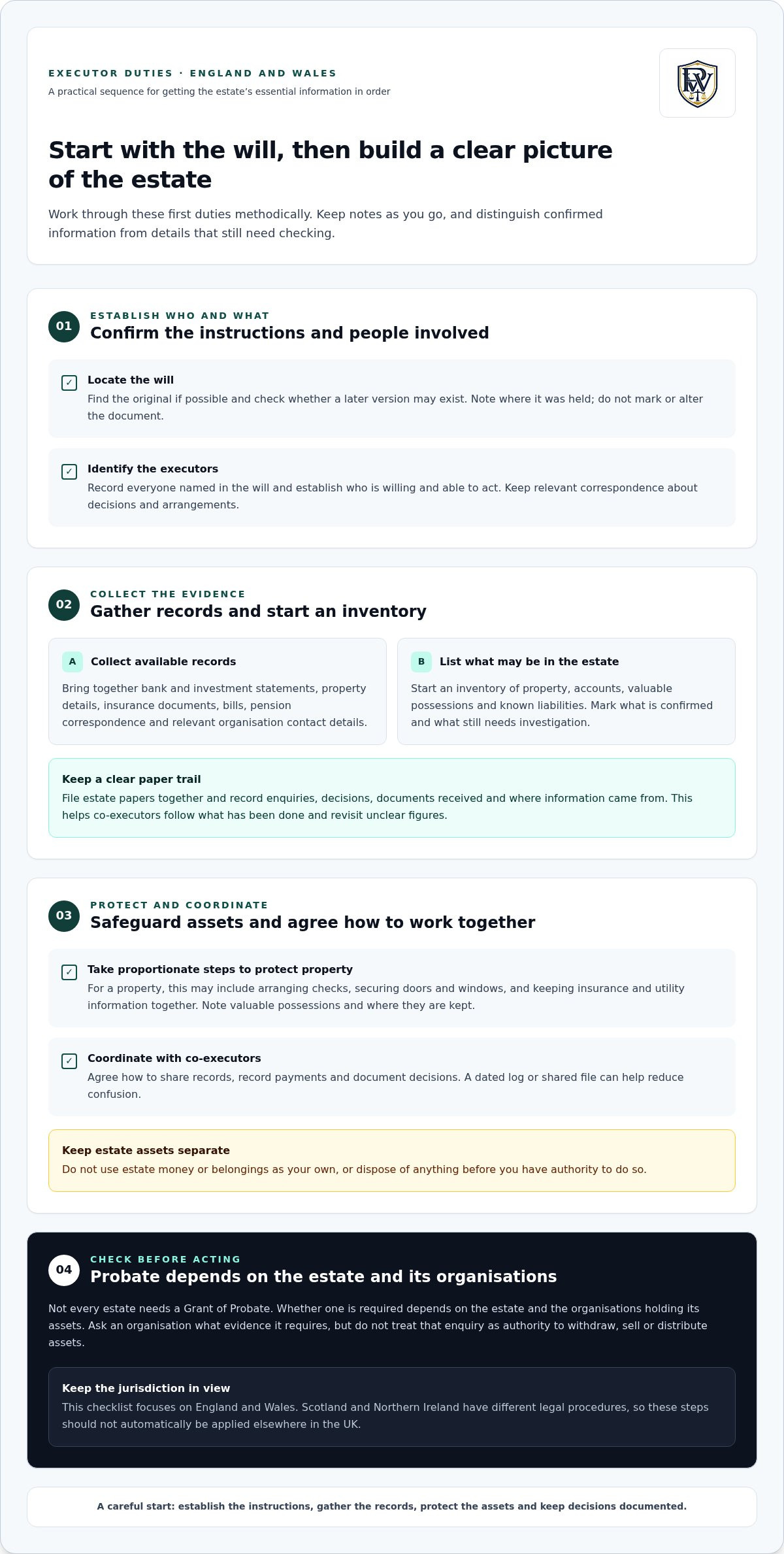
Start by establishing what instructions and information are available before trying to manage accounts or make decisions about estate property. This gives you a clearer picture of who is involved, what may form part of the estate and which records still need to be found. Work methodically and keep notes as you go.
- Locate the will. Find the original if possible and check whether there may be a later version. Note where it was held and avoid marking or altering the document.
- Identify the executors. Record everyone named in the will and establish who is willing and able to act. Keep relevant correspondence about decisions and arrangements.
- Gather initial records. Collect available bank and investment statements, property details, insurance documents, bills, pension correspondence and contact details for relevant organisations.
- Start an inventory. List property, accounts, valuable possessions and known liabilities. Note what is confirmed and what still needs investigation.
Locate the will and organise the estate records
Establish that the document you have is the latest valid will you can identify. Earlier drafts or copies may help explain the history, but don’t assume they replace the signed document. Keep the will with a dated file of estate papers. Record enquiries, decisions, documents received and where each piece of information came from. This helps co-executors see what has been done and makes it easier to revisit an unclear figure.
For guidance on whether a grant is needed and who can apply, consult GOV.UK’s Applying for probate in the UK. Access to a bank account, investment or other asset can depend on the institution’s requirements and the estate’s probate position. Ask the organisation what evidence it requires, but don’t treat that enquiry as authority to withdraw, sell or distribute assets.
Protect assets and identify co-executors
Take proportionate steps to prevent avoidable loss or damage. For a property, this may include arranging for it to be checked, securing doors and windows, and keeping relevant insurance and utility information together. Note valuable possessions and where they are kept. Don’t use estate money or belongings as your own, or dispose of anything before you have the authority to do so.
If co-executors are acting, agree how you’ll share records, record payments and document decisions. A dated log or shared file can reduce confusion, especially when one person makes an enquiry and another receives the reply. Keep receipts and copies of correspondence with the estate records.
Build the inventory in stages rather than treating an early list as complete. Record account providers and approximate balances from available statements, property interests, possessions that may need valuation, and known bills or loans. Mark estimates clearly and update them as reliable information arrives. Accurate date-of-death valuations matter because they provide the starting figures for assessing the estate, reporting tax and keeping administration records.
Careful preparation can also begin before an executor is appointed. A clearly written will and executor-related planning can help make a person’s arrangements easier to understand. The Executor Package offers a way to discuss that planning, rather than estate administration.
Probate, estate valuation, debts and tax: work through the middle stages
Once you have an initial picture of the estate, keep valuation, probate, liabilities and tax as separate tasks. They inform one another, but each has a different purpose. A clear working record helps co-executors compare information, identify what remains uncertain and avoid treating an early estimate as final. The right steps depend on the will, the estate and the organisations holding its assets.
When probate may be needed
A grant of representation provides formal authority to deal with estate assets where the relevant asset-holder requires it. Whether you need one can depend on how assets are owned and the requirements of banks, investment firms or other institutions. Don’t assume every estate needs a grant, or that an estate can always be dealt with without one. Check current GOV.UK guidance for application requirements and forms, and confirm what evidence the relevant asset-holders require.
Before applying, assemble the information the application calls for and resolve gaps in your records where possible. Note what each co-executor has gathered, what remains outstanding and who is following it up. This can reduce duplicated enquiries and help everyone work from the same figures.
How to approach liabilities and tax reporting
Record each known debt or expense with the creditor’s details, the amount claimed, supporting paperwork and whether the amount has been verified. An invoice or a family member’s estimate is a lead to investigate, not necessarily enough information to authorise payment. Check statements and correspondence, ask the creditor for a clear account where needed, and record the reason for each payment. If co-executors are acting, agree how proposed payments will be reviewed and logged.
Keep a separate record for tax reporting. Gather information about the estate’s assets, liabilities, income and any gains during administration. The tax position depends on the estate and the facts available, so don’t assume one form or calculation applies to every case. Use up-to-date GOV.UK and HMRC guidance, and seek appropriate advice if the reporting obligations or figures are unclear. Avoid relying on an old checklist for current forms, thresholds or deadlines.
For each task, note the information you need and the decision it will support:
| Task | Information needed | Decision point |
|---|---|---|
| Value the estate | Asset details and date-of-death values, with supporting statements or valuations | Are the figures complete and reliable enough for reporting and administration? |
| Consider probate | Ownership details and requirements from asset-holders | Does an institution require a grant before releasing or transferring an asset? |
| Review liabilities | Creditor statements, invoices and estate expenses | Is the amount verified, and is there a clear record for any payment? |
| Assess tax reporting | Estate values, income, gains and relevant supporting records | What reporting is required under current HMRC guidance? |
Keep unresolved items visible instead of filling gaps with assumptions. This stage of the executor duties checklist is complete only when you can explain where each important figure came from, what remains uncertain and why the next action is appropriate.
Before distributing an estate: check beneficiaries, payments and records
Distribution is a considered step, not simply the point at which the executor has gathered the assets. Before transferring money or property, check that the estate’s position is sufficiently clear, the will’s instructions have been followed and the people receiving assets have been correctly identified. If a potential claim or uncertainty arises, pause the relevant distribution until you have established how to proceed.
Final checks before beneficiaries receive assets
Use a written pre-distribution check and note how each point has been resolved. The will guides who is entitled to what, but its wording and the estate’s circumstances can raise questions that a general checklist cannot settle.
- Read the will carefully. Confirm the relevant gifts and conditions, and identify each beneficiary using reliable information.
- Review the estate accounts. Compare recorded assets with payments made and check that known liabilities and administration expenses have been considered.
- Check the tax position. Make sure relevant reporting has been considered and that any tax matters affecting distribution are understood.
- Resolve uncertainties. If an instruction is unclear, a beneficiary’s entitlement is disputed or a claim is raised, avoid distributing the affected asset until you have obtained appropriate advice.
An executor must follow the will rather than alter its gifts to suit a beneficiary’s request or their own view of fairness. If a request suggests changing the intended distribution, understand the limits of the executor’s role and the difference between following the will and changing its effect. This context is explored in guidance on whether an executor can change a will.
Keep an administration record and close the process carefully
Record every distribution clearly, including the date, amount or asset transferred, recipient and the part of the will that supports the decision. Keep relevant bank statements, receipts, transfer confirmations, correspondence and valuation documents with the estate accounts. If an asset is divided or transferred in kind, record what was transferred and how its value was established.
Good records help co-executors check that they agree on the figures and provide a clear account of how the estate was handled. They also make it easier to answer a beneficiary’s reasonable request for an explanation. Keep updates factual and measured: explain which steps are complete, what remains unresolved and why progress depends on those matters. Avoid promising a fixed completion date when outstanding information, tax questions or asset transfers may affect progress.
If a claim, trust arrangement or tax issue makes a proposed distribution difficult to assess, obtain professional advice before acting. A practical executor duties checklist can help organise the final review, but it cannot resolve a dispute or replace advice on an ambiguous will. For support with future arrangements, including Will Writing or executor-related planning, you can arrange a free 15-minute consultation by Zoom, Teams or in person.
Prepare an executor with clear estate planning and the right support
An executor’s work begins with understanding the person’s wishes and the estate they’ve left behind. Thoughtful planning can make that starting point clearer. A well-prepared will sets out who is appointed and how the estate is intended to pass, giving the executor an important reference when carrying out their responsibilities.
What to clarify when planning for an executor
Consider whom you appoint and whether they understand the role. It involves practical decisions, careful record-keeping and dealing with financial and personal matters after a death. A trusted relative may be a suitable choice, but the decision should reflect your circumstances and the person’s willingness to take on the responsibility. Naming an executor does not remove their legal duties or make administration automatic.
You can also make it easier for your executor to find essential information. Keep the original will stored securely and tell the appointed person where it is held. Consider maintaining a separate, current record of relevant information, such as:
- Where key documents are stored and who to contact about them.
- Known property, financial accounts and regular commitments.
- Details of any professional advisers involved in your affairs.
- Information that may help explain your wishes or the background to particular arrangements.
Keep this information organised and accessible to the appropriate person, whilst protecting confidential details. Review it when circumstances change, such as a change in family arrangements, assets or your choice of executor. These preparations can give someone following an executor duties checklist a useful starting point, but they cannot replace the executor’s own checks, decisions or responsibilities.
Discuss Will Writing and executor planning
Will Writing can help you set out your wishes in a formal document and consider how the people and arrangements named in it fit together. Clear wording matters. If a gift, condition or appointment could be misunderstood, discussing it as part of your planning may help you express your intentions more clearly.
The Executor Package is another estate-planning option for discussing executor-related arrangements. It provides planning support, not a service that administers an estate or carries out probate duties on an executor’s behalf. The person appointed remains responsible for dealing with the estate in accordance with the will and the circumstances at the time.
A conversation can help you consider your will and the guidance you want to leave. Patrick D Williams Estate Planners offers a free 15-minute consultation by Zoom, Teams or in person. To discuss your arrangements, arrange a free 15-minute consultation.
Take a considered next step with your estate plans
Being appointed an executor can bring substantial responsibility, but clear arrangements made in advance can give that person a more useful starting point. Consider whether your chosen executor knows where to find the will and essential information, and whether your wishes are expressed clearly. Reviewing these arrangements as life changes can help keep them relevant.
An executor duties checklist can help organise the practical work after a death, while estate planning gives you the opportunity to prepare the instructions and records an executor may need. If you’re ready to review your own arrangements, a conversation can help you consider the questions that matter to your circumstances and the support that may be appropriate.
Discuss your estate-planning arrangements and take a steady first step towards giving your wishes greater clarity.
Frequently Asked Questions
What are the main duties of an executor in England and Wales?
An executor is responsible for administering the estate in line with the will and applicable requirements. An executor duties checklist can help organise tasks such as identifying assets, checking liabilities, considering tax and probate requirements, and transferring what remains to beneficiaries. For example, if a will leaves a particular item to one person, the executor should establish who is entitled to it and record its transfer. The exact work depends on the estate.
Does every executor need to apply for probate?
No, probate isn’t required in every case. Whether a grant is needed can depend on the types of assets, how they’re owned and the rules of the organisations holding them. For instance, a bank may have its own process for releasing funds, while jointly owned assets may be dealt with differently from assets held in one person’s name. Check current GOV.UK guidance and the relevant asset-holder’s requirements before deciding how to proceed.
Can an executor pay themselves from the estate?
An executor shouldn’t take payment from the estate simply for carrying out executor duties. They can usually claim reasonable expenses incurred while administering it, provided these are properly recorded and supported by receipts. Payment for acting may be possible where the will authorises remuneration, or where the relevant beneficiaries agree, but the rules depend on the circumstances. Keep expenses separate from personal spending and obtain advice before taking any fee.
How long does an executor have to distribute an estate?
There isn’t one fixed period that applies to every estate. Distribution may take longer if asset information is outstanding, tax matters need attention, a property must be dealt with or a claim has arisen. Avoid promising beneficiaries a completion date before the position is clear. Give factual updates about what has been completed, what remains unresolved and how those outstanding matters affect the next steps.
What happens if an executor makes a mistake?
The consequences depend on the mistake and whether it caused loss to the estate or a beneficiary. For example, an incorrect payment or distribution could require the executor to take steps to put matters right and may expose them to a claim. Keep relevant records, act promptly once an error is identified and seek legal or tax advice where appropriate. Don’t conceal the mistake or make further payments based on uncertain information.
Can an executor refuse to act or step down?
An executor may be able to formally renounce the role before taking steps to administer the estate. If they’ve already acted, stepping aside can be more complicated and may require a formal process. An executor who is unsure should avoid taking further substantive action until they understand their position. Where more than one executor is named, the will and probate arrangements affect whether another executor can continue without them.
Should an executor use a solicitor or professional adviser?
It depends on the estate and the executor’s confidence in handling its requirements. A straightforward estate may be manageable with careful records and current official guidance. Professional advice may be helpful if the will is unclear, a beneficiary raises a claim, the estate includes trusts, or tax reporting is complex. Choose advice that addresses the issue at hand. Estate-planning support helps prepare future arrangements but is distinct from administering an estate.
Leave a Reply