

A pair of mirror wills can leave children’s inheritance less secure than parents expect. If one partner dies and leaves their estate outright to the survivor, the survivor may usually change their own will later, including after remarriage. This risk of sideways disinheritance can affect children from an earlier relationship, even when both parents originally intended them to inherit.
It’s understandable to assume that matching wills will keep a couple’s wishes in place. But mirror wills aren’t automatically binding on the survivor, and a will can only direct assets that form part of the estate. How a home is owned, and whether a trust is used, can also affect what happens.
This article explains how sideways disinheritance can occur, what a will can and cannot control, and how trust planning may help protect children’s inheritance, along with its limitations. It also sets out what to consider when making or updating a will, including family relationships and ownership of the family home. The legal points focus on England and Wales, as inheritance rules differ across the UK.
Key Takeaways
- Understand how sideways disinheritance can happen when a surviving partner later changes how their estate is shared.
- Learn why mirror wills may record matching wishes without making them irrevocable after the first death.
- Compare outright inheritance with trust planning, including how control and benefit may be arranged differently.
- Review family relationships, property ownership and existing documents before making or updating a will.
- Clarify the survivor’s needs and children’s intended future interests so your planning reflects both.
What is sideways disinheritance, and how can it affect children?
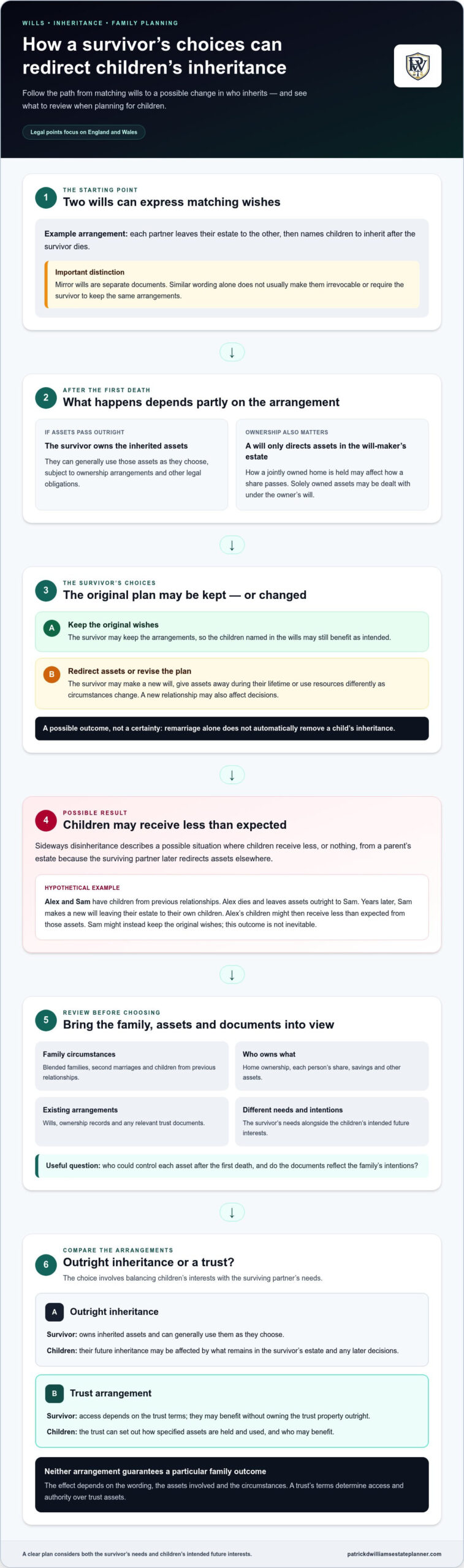
Sideways disinheritance describes a situation where children may receive less, or nothing, from a parent’s estate because the surviving partner later redirects assets elsewhere. It describes a possible outcome, not a formal legal ruling or a guaranteed result.
The concern often arises when partners have children from earlier relationships and make wills expressing similar wishes. They may expect each other to benefit first, with the children inheriting later. But a will generally deals with assets within the will-maker’s estate, and its legal effect depends on its wording and circumstances. For general background on wills and their terminology, see Will and testament.
How the concern can arise after the first partner dies
If the first partner leaves assets to the survivor outright, the survivor may control those assets, subject to the relevant ownership arrangements and any other legal obligations. They could make a new will, give assets away during their lifetime or use their resources differently as circumstances change. The children’s expected inheritance may therefore change.
Hypothetical example: Alex and Sam each have children from previous relationships. Their wills express a wish that the survivor should inherit first, with both sets of children benefiting later. Alex dies and leaves assets outright to Sam. Years later, Sam makes a new will leaving their estate to their own children. Alex’s children might then receive less than expected from those assets. This is one possible outcome, not an inevitable one. Sam might keep the original wishes, and remarriage alone doesn’t automatically remove a child’s inheritance.
Which families may want to consider this risk
Blended families, second marriages and couples with children from previous relationships may want to consider what happens to assets after the first death. The issue can also matter where one partner owns a larger share of the home or has substantially more savings or other assets.
The details matter. A jointly owned home may be held in a way that affects how a share passes, while assets owned solely may be dealt with under the owner’s will. Review existing wills, ownership records and family circumstances together. A useful starting point is to identify who could control each asset after the first death, then consider whether the wills reflect the family’s intentions.
Why mirror wills may not prevent sideways disinheritance
Mirror wills are separate wills made by two people, often with similar or matching instructions. For example, each might leave their estate to the other, then name the same people to inherit after the survivor dies. The documents may look alike, but that alone doesn’t usually make them irrevocable or require the survivor to keep the same arrangements after the first death.
This distinction matters when considering sideways disinheritance. Matching terms express what each person wants their own will to say, but they don’t automatically create a binding agreement between them. Whether a particular arrangement has a different legal effect depends on the documents, evidence of any agreement, the circumstances and the applicable law. The Cornell Legal Information Institute offers a general explanation of disinheritance; it is an American educational source, not guidance on the law in England and Wales.
What may change after one partner dies
After inheriting outright, a survivor may be able to decide how those assets are used and what their own will says. Their financial needs may change, they may form a new relationship, or they may choose to make gifts during their lifetime. These choices can affect what remains in their estate for the people named in an earlier will.
This doesn’t mean every decision is legally unrestricted or beyond challenge. The terms of a will, ownership of assets and the particular facts all matter. But matching wills by themselves may not keep assets set aside for children after the first partner’s death.
A family promise is not the same as a legal safeguard
A survivor may sincerely intend to follow a shared family plan. An assurance between partners can be meaningful to them, but it may not control how the survivor later distributes assets. An intention expressed in a will is also different from a trust arrangement, which can set out how assets are held, who may benefit and who has authority over them.
A trust is not a guarantee that every family aim will be achieved. Its effect depends on how it is drafted, the assets involved and the circumstances. In England and Wales, carefully prepared wills and trust planning can help clarify the intended arrangements. Start by reviewing the existing documents and the family’s wishes, then consider whether a simple will or a trust arrangement better reflects them. Explore will and trust planning.
Which estate-planning options may help protect children’s inheritance?
Planning for children’s future inheritance involves balancing their interests with the surviving partner’s needs. An outright gift gives the survivor ownership of the inherited assets, while a trust can set conditions for how specified assets are held and used. The right approach depends on the family’s intentions, the assets and the legal documents.
| Consideration | Outright inheritance | Trust arrangement |
|---|---|---|
| Survivor access | The survivor owns inherited assets and can generally use them as they choose. | Access depends on the trust terms. A survivor may be entitled to benefit without owning the trust property outright. |
| Children’s interests | Children may inherit what remains under the survivor’s will. | The trust can specify who may benefit and how or when assets may pass to children. |
| Flexibility | The survivor may have greater freedom to use or distribute the assets. | Trustees must act within the trust terms, which can provide structure but may limit flexibility. |
| Key limitations | The survivor may later change their will or use the assets, affecting what remains. | Drafting, administration, tax and ownership issues need consideration. A trust cannot prevent every dispute or change in circumstances. |
How a trust may balance the survivor’s needs with children’s interests
A life-interest arrangement is one possible approach. In broad terms, it may allow a survivor to benefit from specified trust assets during their lifetime, with the trust setting out who is to benefit afterwards. The survivor’s right to benefit is distinct from outright ownership of the trust property. The precise rights, including any access to income or use of a home, depend on the wording and structure.
A property protection trust may be relevant where a home is part of the family’s plan. Its suitability depends on how the property is owned, what share can be dealt with and how the trust is drafted. Read this guide to property protection trusts for more background.
What a trust cannot automatically guarantee
A trust is not a universal safeguard. Its effects depend on the will, trust deed, assets and administration, and family circumstances may change. Legal, tax and property-ownership considerations also matter. Bespoke will and trust planning can help clarify who may benefit and who controls particular assets, but the arrangements need to reflect the family’s aims. This is especially important when addressing sideways disinheritance while also considering the survivor’s security.
How to plan for sideways disinheritance without overlooking the details
A clear plan starts with the family’s circumstances and the assets each person can direct. Use this checklist to gather the details before making or updating wills. The legal points below relate to England and Wales; rules can differ elsewhere in the UK.
- Map family relationships. List children from current and previous relationships, current and former partners, and anyone else you intend to benefit. Note any particular family responsibilities or expectations.
- List assets and ownership. Record the home, savings and other significant assets, and who owns each one. For jointly owned property, establish whether it is held as joint tenants or tenants in common.
- Gather existing documents. Bring together current wills, trust documents and property ownership details. Check whether they still reflect your family circumstances and intentions.
- Set out both sides of the plan. Clarify what the survivor may need during their lifetime, which children you intend to benefit later and how much flexibility the survivor should have.
- Review after major changes. Revisit the arrangements after changes to relationships, finances or property ownership, and whenever your existing documents may no longer match your wishes.
Review the family, assets and current arrangements
How a home is owned can affect what a will can distribute. In broad terms, with a joint tenancy, the deceased owner’s interest generally passes to the surviving joint owner rather than under their will. With a tenancy in common, each owner has a separate share that can generally be dealt with in their will. The precise position depends on the title and circumstances, so include the ownership documents in your review. The property trust guide above explains how a trust and a family home may fit into a plan.
Record intentions and consider suitable legal structures
Be specific about who should benefit, what support the survivor may need, and whether they should have discretion over how assets are used or passed on. Clear will drafting and coordinated ownership arrangements help the documents work together. A trust may be worth considering if the family’s aims call for defined interests or a particular balance of control, but no one structure suits every family.
Use the checklist to prepare for a planning discussion and discuss your family’s will and trust plan. Reviewing relationships, assets and documents together can help you address sideways disinheritance while keeping the survivor’s needs in view.
Taking the next step: making a clear plan for your family
The central question is not only who is named in each will. It is who will own or control each asset after the first death, and what choices that person can make. Reviewing the documents and ownership arrangements together can show whether your family’s intentions are clearly recorded and which parts of the plan need further thought.
What to prepare before discussing your estate plan
Preparing a few key details can make a planning discussion more focused. Gather:
- Current wills and any trust documents.
- Information about property ownership and other significant assets.
- A note of the people you intend to benefit, including children from previous relationships.
- Your thoughts about the survivor’s financial security and the children’s future interests.
- Details of major changes since the documents were prepared, such as a new relationship, changes to dependants, a different home or significant changes to your assets.
You don’t need to have every answer in advance. These details provide a starting point for considering who may benefit from each asset and who will make decisions about it.
How professional estate planning can bring the documents together
Wills, trusts and property ownership each play a part in an estate plan. A will may set out how assets within the estate are to be distributed, while ownership arrangements can affect whether a particular share passes under the will. A trust may be worth exploring where the family wants to define how certain assets are held, who may benefit and how the survivor’s needs are considered.
Bespoke drafting can express your intentions clearly and take account of your family structure. It cannot guarantee that circumstances will never change or that every intended outcome will happen exactly as planned. The aim is to understand the choices the documents create and make them work together as far as possible.
If you’re concerned about sideways disinheritance, a review can help identify the questions that matter to your family. Bring your existing wills, property details and intentions to a free 15-minute consultation to discuss possible next steps. Arrange a free 15-minute consultation.
Put your family’s intentions into a clear plan
Protecting children’s inheritance starts with understanding who owns and controls each asset after the first death. Mirror wills may record matching wishes, but they don’t necessarily restrict what the survivor can do later. Reviewing the wills alongside property ownership and family circumstances can help show whether the plan reflects everyone’s needs.
Sideways disinheritance isn’t inevitable. Bespoke will and trust planning can help set out who should benefit and how assets are intended to pass, while taking account of the survivor’s security. The right arrangements depend on your family and circumstances, and no document can guarantee that life will remain unchanged.
A practical next step is to discuss your existing wills, property details and intentions. Patrick D Williams Estate Planners offers a free 15-minute consultation, with support by Zoom, Teams or in person, to explore your estate-planning options. Book a free 15-minute estate-planning consultation.
Clear planning helps you make considered choices for the people who matter and gives your family a clearer understanding of your wishes.
Frequently Asked Questions
What does sideways disinheritance mean?
Sideways disinheritance is a commonly used description for a situation where children, often from an earlier relationship, receive less or nothing after the surviving partner changes how their estate will pass. It isn’t a specific legal mechanism or an inevitable result. What happens depends on matters such as who owns the assets, what each will says, and whether trust arrangements apply. A child’s expected inheritance may not be protected simply because it was once intended.
Can a surviving spouse change a mirror will?
A surviving spouse may be able to make a new will, but the legal position depends on the documents and circumstances. Mirror wills are generally separate wills, even if their terms match. Matching wording alone doesn’t establish that the survivor is bound to keep those wishes. If there’s a separate agreement or trust arrangement, it may affect the position, so consider the documents and relevant evidence together.
Can a trust protect children’s inheritance if a parent remarries?
A properly drafted trust may set out how particular assets can benefit a surviving partner and later pass to children, including if the survivor remarries. The survivor’s rights and the children’s interests depend on the trust terms and the assets involved. A trust isn’t an absolute guarantee against disputes, claims or changed circumstances. Its effect also depends on ownership, administration and relevant law, so its suitability should be considered in light of the family’s aims.
Is a property protection trust the same as a life interest trust?
Not necessarily. The terms can arise in related estate-planning discussions, but they shouldn’t be treated as interchangeable without checking the actual structure. A life interest trust commonly gives someone a defined right to benefit from trust assets, while a property protection trust may describe an arrangement involving a home. The rights created depend on the documents and ownership. Review the precise wording with an estate-planning professional rather than relying on the label alone.
What happens to a jointly owned home when one partner dies?
The outcome depends partly on how the property is owned and on the will. In England and Wales, joint tenants generally own the property together, and the survivor typically takes the deceased’s interest by survivorship. Tenants in common each own a separate share, which may pass under the deceased’s will. A will may not control the whole jointly owned home, so check the title documents and how ownership fits the inheritance plan.
Does sideways disinheritance law apply across the whole UK?
No single set of succession rules applies identically throughout the UK. This article’s planning guidance is framed for England and Wales. Scotland and Northern Ireland have distinct succession laws, and rules or terminology relating to trusts may differ as well. The relevant jurisdiction can affect how a will, property ownership or trust arrangement operates. If assets or family circumstances involve another part of the UK, seek guidance that considers the law applying there.
Can children challenge a will if they are left out?
In some circumstances, a child may be able to bring a claim, but eligibility, time limits and likely outcomes depend on the applicable law and the facts. In England and Wales, the Inheritance (Provision for Family and Dependants) Act 1975 may be relevant for eligible applicants. Being left out doesn’t by itself mean a claim will succeed. Estate planning can help record wishes clearly, but assessing or pursuing a dispute is a separate matter.
Leave a Reply