

A will’s cost depends on the work involved, not just the document. How much a solicitor charges for a will in the UK depends on whether your wishes are straightforward or involve trusts, multiple properties, overseas assets or complex family arrangements. Solicitors often charge a fixed fee for a simple will, while more involved instructions may require additional work.
It’s reasonable to want clarity about costs before setting out your wishes. This article explains how fees for simple and mirror wills are structured, what can make a will more complex, and how storage or executor charges may apply. It also separates the cost of preparing a will from the cost of administering an estate, so you can see which charges relate to your plans now and which may arise later.
Key Takeaways
- Understand how fees for simple and mirror wills differ, and why the work involved affects the final cost.
- Recognise when trusts, overseas assets, multiple properties or complex family arrangements can make a will more involved.
- Distinguish will storage charges from the separate costs of probate and estate administration.
- See how naming a professional executor may lead to fees being paid from the estate after death.
- Identify when will writing, lasting powers of attorney or trust planning may help you put your wishes in order.
Additional costs, storage and executor fees
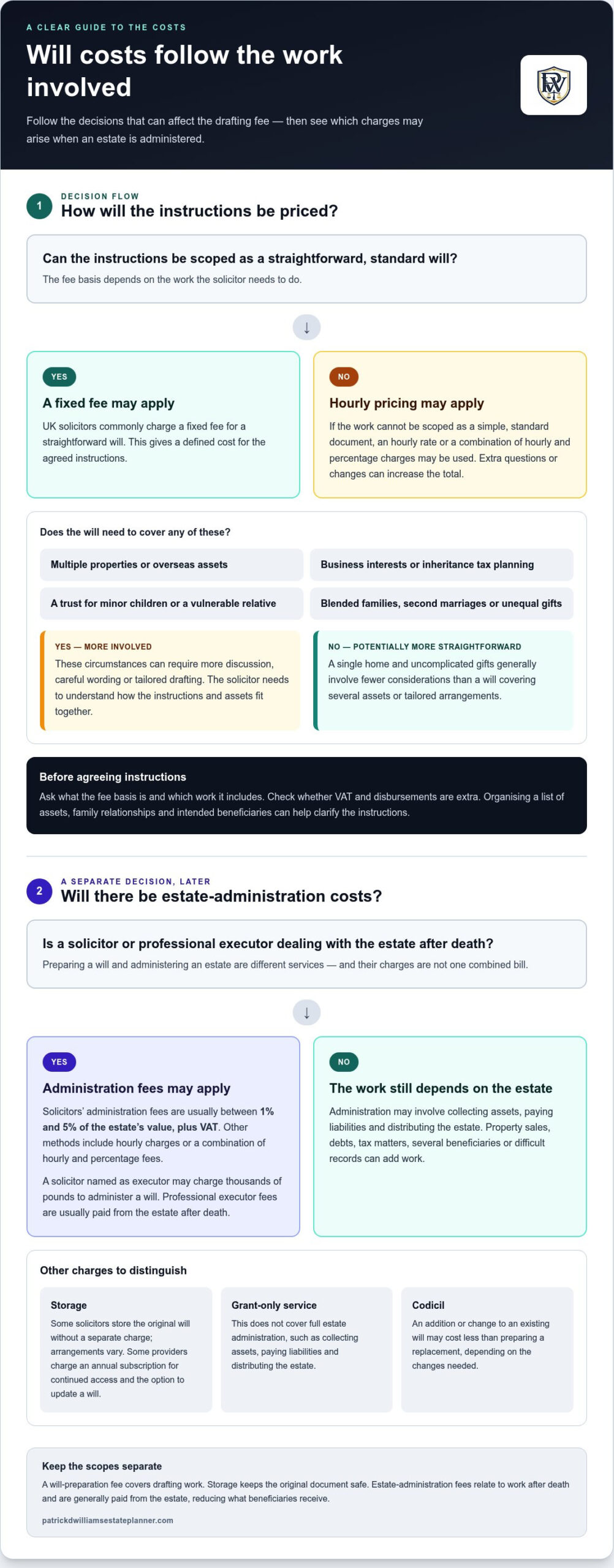
The fee for preparing a will is separate from the cost of administering an estate after death. A straightforward estate may involve less work than one with property sales, debts, tax matters or several beneficiaries. The executor’s instructions and available records can also affect the time required. Administration costs are generally paid from the estate, reducing what beneficiaries receive.
Some solicitors store an original will securely without a separate charge, but storage arrangements vary and may affect the overall cost. Keeping the original document safe matters because executors need to locate it when dealing with the estate. Some providers charge an annual subscription for continued access and the option to update a will.
Probate charges depend on the work required. Full administration is a wider service, involving tasks such as collecting assets, paying liabilities and distributing the estate. Solicitors’ administration fees are usually between 1% and 5% of the estate’s value, plus VAT. A percentage fee can therefore make the estate’s value a major cost factor.
Other pricing methods include hourly charges or a combination of an hourly rate and a percentage. Professional executor fees are usually paid from the estate after death, rather than upfront. A solicitor named as executor may charge thousands of pounds to administer a will. Costs can be significant when the estate includes several assets, complex paperwork or unresolved financial matters. Before agreeing to instructions, ask what the fee covers, including whether disbursements and VAT are extra.
Separate expenses may also arise during administration, apart from the solicitor’s professional fee. A codicil, which adds to or changes an existing will, may cost less than preparing a replacement, depending on the changes needed.
These figures describe different services, not one combined bill. Compare the scope carefully: a Grant-only service does not cover full estate administration, while storage is for keeping the original will safe. The estate’s assets, the executor’s role and the work involved determine which charges may apply. Clear instructions and an organised record of assets help executors understand what needs attention and account for administration costs.
Factors that make will-writing more complex
UK solicitors commonly charge a fixed fee for a straightforward will, giving the client a defined cost for the agreed instructions. An hourly rate may apply when the work cannot be scoped as a simple, standard document. Before giving detailed instructions, ask what the fee basis is and which work it includes. This helps distinguish the drafting fee from separate work that may arise later.
Complexity depends on the decisions the will must express and the assets it covers. In England and Wales, multiple properties, overseas assets, business interests or inheritance tax planning can require more detailed advice. For example, a will covering a family home, a rental property abroad and business shares involves more considerations than one covering a single home and uncomplicated gifts. Each asset needs clear instructions so the executor can carry out your wishes.
Family circumstances can also add drafting work. A trust intended to manage assets for minor children or a vulnerable relative can make a will more complex. The document may need to explain who manages the trust, who benefits and when assets can be distributed. Unclear or conflicting wishes can leave room for disputes, so the solicitor needs to understand how each instruction fits with the others.
Hourly rates vary according to the level of professional doing the work. These are guideline rates, not a quote for a particular will.
Probate fees depend on the work involved in dealing with the estate, not just the length of the will. Several properties, overseas assets, business interests, trusts, debts or difficult records can make administration more involved. Disputes between beneficiaries may add work, as the executor must address competing concerns before distributing assets. A straightforward estate with clear records and uncomplicated instructions generally involves fewer administrative tasks.
For a fixed-fee will, the solicitor considers the scope and complexity of the instructions. An hourly arrangement depends on the time spent, so extra questions or changes can increase the total. Before settling your wishes, organise a list of assets, family relationships and intended beneficiaries. If you need support setting out your will-planning instructions, consider taking advice before drafting begins.
Additional charges for more complicated wills
A will covering several assets or tailored arrangements usually needs more drafting and discussion than a basic document. In England and Wales, multiple properties, overseas assets, business interests and inheritance tax planning can increase complexity. Each raises questions about ownership, beneficiaries and how the instructions should work together. For example, someone with a home, a business share and a foreign bank account needs each asset considered as part of the estate plan.
Trusts can also add work. A will setting up a trust for minor children or a vulnerable relative must explain how the arrangement operates. The document may need to identify trustees and beneficiaries, and specify when assets can be distributed. A solicitor needs to understand the trust’s purpose and how it fits the wider instructions. This tailored drafting takes more work than recording a straightforward gift.
Family circumstances matter too. A blended family, a second marriage or unequal gifts to children may require careful wording. For example, leaving a home to a spouse whilst preserving a later gift for children creates instructions that must be clear and consistent. If someone expects no inheritance tax, but wants planning that addresses possible tax exposure, the solicitor may need to explore the estate’s assets and intended arrangements before drafting.
Fees reflect the complexity and time involved, rather than the document’s length alone. A solicitor may need to review property ownership, business interests, existing arrangements and detailed family instructions. Wills involving trusts, multiple properties, overseas assets or complex family structures may cost more than a straightforward will. Costs can rise further if instructions change during drafting or require additional advice.
There is no single average fee for every complex estate. A will covering one property and a trust for a child differs from one covering several properties, a business and overseas assets. The number and type of decisions matter. A fixed fee can cover an agreed scope, while work outside that scope may be charged separately. The fee basis should state which drafting and advice are included.
Will-writing costs and probate costs are separate. At probate, the executor’s workload may depend on the estate’s assets, records, debts and any disputes between beneficiaries. A straightforward estate with clear ownership records differs from one involving overseas accounts or contested instructions. In England and Wales, without a valid will, an estate may be distributed under the rules of intestacy, leaving the deceased’s wishes unrecorded. Clear drafting helps the executor understand the intended plan.
Before drafting begins, organise a list of properties, accounts, business interests, beneficiaries and existing trusts. Note which assets are overseas or jointly owned, and describe what you intend for each. These details help the solicitor assess the work and explain how complexity affects the fee. Changes to family circumstances or asset ownership may also mean the will needs reviewing later.
Simple will prices for individuals and couples
Will-writing fees can vary between England and Wales, Scotland and Northern Ireland, and between firms. The price examples here are UK market figures, not a tariff for every jurisdiction. Before comparing quotes, establish which jurisdiction the advice covers and whether the fee includes a meeting, drafting, revisions and guidance on signing.
These are market figures, not a quote for an individual matter. The final fee depends on the instructions, the work included and whether the person’s family and financial circumstances are uncomplicated.
Couples often ask about mirror wills, which contain broadly matching provisions for each person. Compare like with like: check whether each person receives a separate will and whether VAT is included in the quoted total.
Local research illustrates why prices can differ between markets. These figures are local examples, not a universal UK price guide. Couples should compare what each quotation covers, rather than focusing on the headline figure alone.
Before speaking with a solicitor, prepare a clear record of your circumstances and wishes. List your main assets, such as property, savings, investments and business interests, and note how each is owned. Record the full names of intended beneficiaries, what you want each to receive and your proposed executor. If you have children, write down your proposed arrangements for their care.
Bring relevant documents if available, such as property ownership records, account statements, details of existing trusts and an earlier will. You don’t need to resolve every decision before the first discussion. A qualified solicitor can use your list to identify missing instructions, explain how the proposed structure works and clarify which matters need further consideration. For couples, discuss individual wishes as well as shared plans, since each person’s will still needs to reflect their intentions.
Solicitor fees for simple and mirror wills
Simple and mirror wills usually cost less than documents involving trusts or complicated assets. The right option depends on whether your wishes and family arrangements are straightforward.
Simple Single Will Fees
A simple single will records one person’s wishes in a straightforward financial and family situation. These market figures can help frame a quote, but the scope matters: clarify whether drafting, revisions and guidance on signing are included.
A solicitor-drafted will offers professional help to express your wishes clearly. A cheaper option can carry more risk if instructions are unclear or signing requirements are missed. In England and Wales, UK Parliament says two witnesses must be present together when the person signs.
Solicitor-Drafted and DIY Options
A DIY will is prepared without a solicitor drafting the document, while a solicitor-drafted will includes professional assistance. This distinction matters if your wishes involve trusts, several properties or less typical family arrangements. Solicitors are regulated by the Solicitors Regulation Authority; don’t assume every will-writing service is regulated in the same way as a solicitor.
Check whether a quote covers two separate documents and whether VAT is included. Matching wills reflect broadly similar plans, but each person still needs their own wishes recorded.
Free Wills Month runs twice a year, in March and October. Its recurring timing gives readers two opportunities each year to look for participating offers. The dates alone don’t establish eligibility, so read the scheme’s stated terms before relying on a free service.
Low-cost online options can suit straightforward instructions, but errors in signing or witnessing can put a will’s validity at risk. In England and Wales, a will may be invalid if it is not signed correctly or a witness is a beneficiary. A beneficiary, or their spouse or civil partner, should not witness it, as the gift to that beneficiary may fail.
Trusts can add specific instructions for managing assets, such as providing for minor children or a vulnerable relative. A Property Protection Trust, Discretionary Trust or Bare Trust involves arrangements beyond a basic gift, so the purpose and intended beneficiaries need careful consideration. For support putting your wishes into a professionally prepared will, explore will-writing guidance.
Patrick D Williams Estate Planners: Will Writing
Patrick D Williams Estate Planners helps individuals and families put their wishes into a will and consider how their wider estate plans fit together. Its services include Will Writing, Lasting Powers of Attorney, Property Protection Trusts and Discretionary Trusts. This can help when you want to record clear instructions or consider how a trust may support your plans.
You can discuss your circumstances in a free 15-minute consultation, with support by Zoom, Teams or in-person visits. The discussion can help you identify which planning matters to address and what information to prepare.
To discuss your will-writing needs, contact Patrick D Williams Estate Planners.
Make your next step a considered one
Understanding how much a solicitor charges for a will in the UK is a useful starting point, but your next decision is what you need the will to achieve. Set out the people and priorities you want it to protect, then consider whether your plans need to address wider arrangements. Clear priorities give you a practical basis for discussing your wishes and deciding what advice would help.
Patrick D Williams Estate Planners offers Will Writing, Lasting Powers of Attorney and Property Protection Trusts. These services can help you consider your will alongside decisions about managing your affairs and protecting property. Prepare by noting the questions that matter most to you, including how your wishes should reflect your family circumstances and future plans.
Take the next step at a pace that suits you. Contact Patrick D Williams Estate Planners to discuss your will-writing needs and explore a clear way forward.
Frequently Asked Questions
How Much Does a Will Cost?
A solicitor-drafted single will is typically £188 to £263 on the UK market, with a median of about £225. A couple’s mirror wills are usually priced as a pair, while trusts or overseas assets can raise the fee. Treat these figures as a starting point when comparing what each quote includes, such as drafting, revisions, VAT and execution guidance.
Are cheap Wills worth it?
A cheaper will can suit someone with uncomplicated wishes, provided the wording reflects their intentions and it is signed correctly. In England and Wales, an incorrect signature or a beneficiary acting as a witness can put a will’s validity or a gift at risk.
Why use a solicitor to write your Will?
A solicitor can help turn your instructions into a clear document and identify where a gift, trust or family arrangement needs careful wording. Solicitors are regulated by the Solicitors Regulation Authority and are required to hold professional indemnity insurance. For example, a parent dividing assets between children from different relationships may benefit from advice that clarifies each intended gift and reduces the risk of ambiguity.
Are there any hidden costs when making a Will?
Possible extra charges include storing the original will, amending it later or using an online service with an annual subscription. Some solicitors store wills securely without charge. Probate and estate administration fees arise after death and are separate from the cost of preparing the document. Before agreeing to instructions, check what the quoted fee covers and whether VAT or additional work is charged separately.
Can I write my own Will for free?
Yes. Writing a will by hand may be free, and you don’t legally need a solicitor to make a valid will. In England and Wales, the person making the will must be aged 18 or over and have the mental capacity to understand what they’re signing. Two witnesses must be present together when the will-maker signs. A beneficiary, or their spouse or civil partner, should not witness it.
What is the average cost of a solicitor-drafted will in the UK?
A wider market range for solicitor-drafted single wills is £188 to £263, with a median of about £225. These figures reflect different samples and quoted scopes, so compare like with like. For instance, one quote may include a meeting and revisions, whilst another may cover drafting only.
How much does a solicitor charge for mirror wills for a couple?
The difference between quoted totals can reflect the scope and pricing basis. Check whether the fee covers two separate wills, whether VAT is included and what happens if either person later changes their instructions.
How much do complex wills involving trusts or overseas assets cost?
A trust for a vulnerable relative, for example, may require more detailed provisions than a straightforward gift. The specific assets, family arrangements and drafting work shape the fee.
Leave a Reply