

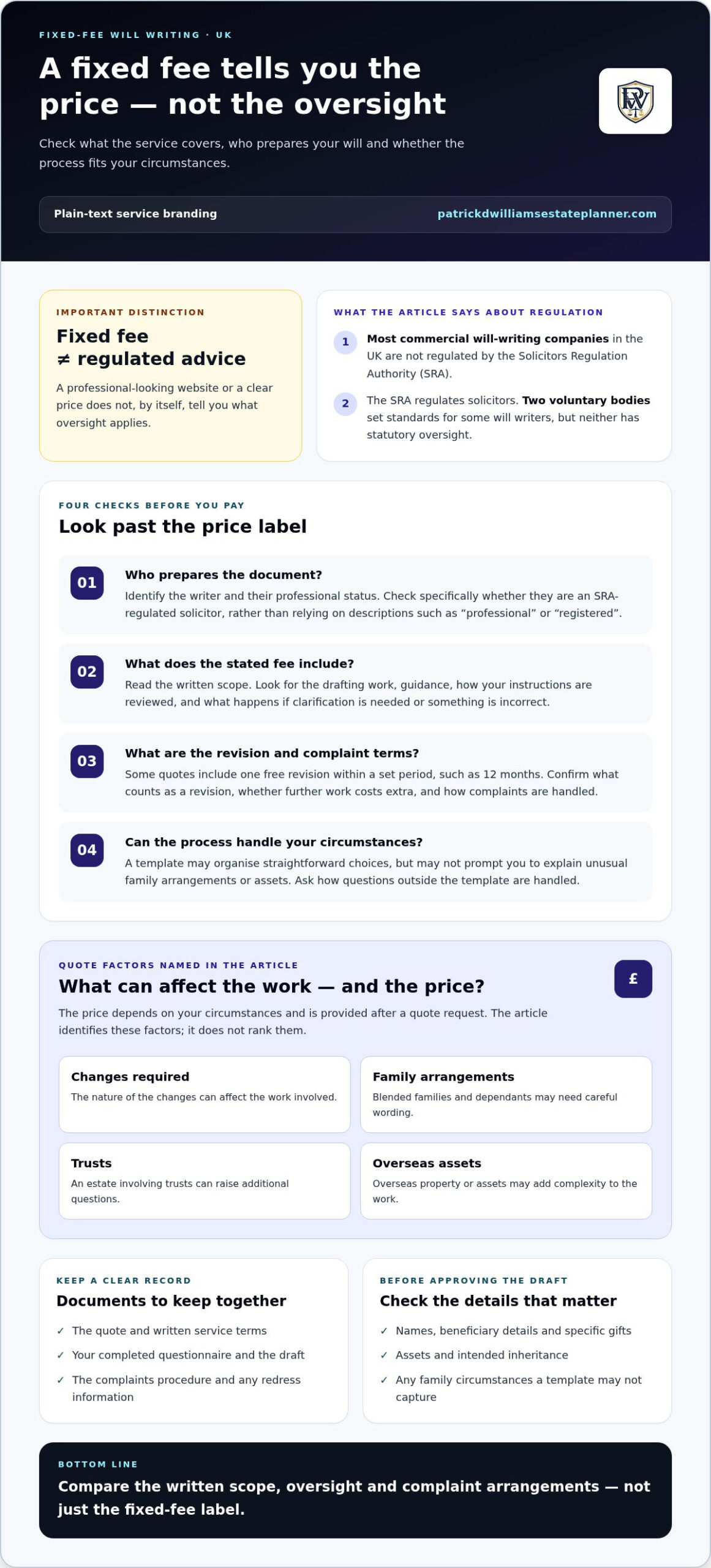
A fixed fee is not the same as regulated advice. Commercial will-writing companies in the UK are generally not regulated by the Solicitors Regulation Authority, and two voluntary bodies set standards for some will writers without statutory oversight. When choosing fixed fee will writing online, look beyond the price label and understand what work the fee covers.
It’s reasonable to want a clear cost and a straightforward process when putting your wishes in writing. This guide explains what a fixed-fee service may include, how regulation differs between providers and what you need to do for a will to be valid. According to GOV.UK, the person making a will must sign it in the presence of two witnesses.
You’ll also learn what to look for in the service scope, how revisions and complex circumstances can affect the work, and when an online process may suit your needs. The aim is to help you make informed decisions about your wishes, your family and the practical steps that give your will effect.
Key Takeaways
- Look beyond a fixed fee to understand which drafting work, guidance and revisions it covers before you begin.
- Most commercial will-writing companies are not regulated by the SRA; two voluntary bodies set standards for some will writers, but neither has statutory oversight.
- Choose executors who can manage your estate, and consider how guardianship and beneficiary arrangements reflect your family’s circumstances.
- For a will to be valid, it must be in writing and signed by the person making it in the presence of two witnesses, according to GOV.UK.
- The Property (Digital Assets etc) Act 2025 recognises digital assets as personal property, according to legislation.gov.uk, so consider how your digital holdings fit into your estate plans.
Are commercial will-writing companies regulated?
Will writers do not all have the same regulatory status. Most commercial will-writing companies in the UK aren’t regulated by the Solicitors Regulation Authority (SRA), unlike solicitors. Two voluntary bodies set standards for some will writers, but they do not have statutory oversight. This distinction matters: a professional-looking website or fixed fee doesn’t, by itself, tell you what oversight applies.
Before using an online will-writing service, find out who prepares your document and what standards apply. Look for clear information about the writer’s professional status, the service’s scope and how to raise a concern. The terms should explain what happens if your instructions need clarification, contain a mistake or require revision. These details help you understand the service rather than relying on its price label.
Fixed-price online services commonly set out a defined process for straightforward wills. You may enter details about your circumstances, name beneficiaries and executors, then review the draft before signing. The stated fee should make clear which drafting and support steps are included. Some will-writing quotes include one free revision within a set period, such as 12 months. Read the terms to understand what changes count as a revision and whether further work falls outside the stated scope.
You can change a will by making a codicil or a new will. Handwritten amendments to a signed will can cause problems. The price depends on your circumstances and is provided after a quote request. Factors include the changes required, your family arrangements and whether the estate involves trusts or overseas assets.
Prepare a clear record of your assets, debts, intended beneficiaries and the people you may appoint as executors or guardians. Include relevant details about property ownership, savings, business interests and online accounts. Note any specific gifts and explain how you want the remainder of your estate distributed. Clear instructions help the drafting process reflect your intentions and reduce the risk of an avoidable omission.
Online services can suit couples and families with straightforward wishes, provided each person’s intentions are recorded clearly. Blended families may need careful wording if a spouse, children from an earlier relationship or other dependants are beneficiaries. Estates involving trusts, overseas property, business assets or vulnerable beneficiaries can raise additional questions. The key issue is whether the service can address your will’s needs, rather than simply collect standard answers.
Digital property also deserves consideration. The Property (Digital Assets etc) Act 2025 recognises digital assets as personal property, according to legislation.gov.uk. Make an inventory of relevant accounts and assets, then consider how your instructions deal with them. A will should express your wishes clearly, while protecting private access details such as passwords from being written into the document.
SRA regulation and consumer protection
The Solicitors Regulation Authority (SRA) regulates solicitors, but most commercial will-writing companies aren’t regulated by it. This affects which professional rules apply to the person preparing your will. A business may describe its service as professional or its writers as registered, so identify the specific body and what that status means.
Before paying for a fixed-fee service, read its terms and establish who drafts the document. Check what the quoted scope covers, how instructions are reviewed, and whether questions or revisions are included. A template can organise straightforward choices, but may not prompt you to explain unusual family arrangements or assets. The relevant protection depends on the provider’s status, the service terms and the process available if a concern arises.
Consumer redress is not one process shared by every will-writing business. Ask for the complaints procedure in writing and note who receives a complaint, how it is handled and whether an independent redress scheme applies. Keep the quote, terms, completed questionnaire and draft together. These records can help you explain a concern about an omitted gift, incorrect beneficiary details or a service that differs from what was agreed.
Online and phone consultations can help clarify your instructions before a document is drafted. Prepare a short list of your assets, intended beneficiaries and questions about your estate. Explain circumstances a tick-box template may not capture, such as children from an earlier relationship or a property shared with someone else. Afterwards, review the written summary and correct any misunderstanding before approving the draft.
The risks of a fixed-fee online will-writing service include choosing a template that doesn’t reflect your family circumstances, entering incomplete information or misunderstanding what the fee covers. An unclear complaints process can also make a later concern harder to resolve. Reduce these risks by reading the service terms and checking every name, gift and instruction in the draft.
Use a practical review before proceeding:
- Identify who prepares the will and whether they are an SRA-regulated solicitor.
- Read the written service scope, including revision terms and complaint arrangements.
- Check that the draft reflects your assets, beneficiaries and intended inheritance.
- Ask how the service handles questions that fall outside its template.
For a more personal discussion of your estate plans, you can explore estate planning guidance before deciding which drafting process suits your circumstances.
Executors, guardians and beneficiaries
An executor is responsible for dealing with the estate under the will. They identify assets, handle necessary administration and distribute gifts to beneficiaries. Including an executor in your will is an important part of planning how your estate will be administered. Choose someone organised, trustworthy and willing to take on the responsibility, such as a family member who understands your wishes.
You can appoint up to 4 executors. Naming more than one can share responsibility, but each person should be able to work with the others. Executor arrangements may need extra thought when a will includes a trust or beneficiaries under 18. Consider this when planning a trust or leaving assets to children, rather than treating executor choices as a form-filling detail.
Guardianship deserves careful thought if you have minor children. Consider which adult understands your family’s values and could provide a stable home. Speak with the person you have in mind before naming them, so they understand the role you wish them to take. Record your choice clearly in the document and review it if your family circumstances change.
Beneficiary instructions should identify people clearly and explain what each is to receive. For example, distinguish between a specific gift, such as a named item, and a share of the remaining estate. If you have children from different relationships, make each intended gift explicit. A will leaving everything to a spouse may unintentionally disinherit children from an earlier relationship.
Think about beneficiaries who may need additional support. A vulnerable beneficiary might find it difficult to manage a direct inheritance, so consider whether a trust arrangement needs discussion. Trusts add responsibilities for those administering the estate, making clear drafting and suitable executor choices especially important. List the intended beneficiaries and the purpose of any trust before preparing your instructions.
Before submitting an online will form, record your proposed appointments and gifts. Include alternatives in case a named executor or beneficiary cannot take part. Check spellings, relationships and the wording of each gift against your intentions. A careful review can catch an omitted child or unclear description before the document is signed.
- Name at least 1 executor, and consider whether 2 are needed for a trust or beneficiaries under 18.
- Choose executors who can manage practical responsibilities and cooperate with one another.
- Discuss a proposed guardianship role with the adult you intend to name.
- Set out each beneficiary’s gift clearly, including arrangements for children and vulnerable people.
Executor decisions connect your written wishes to the practical administration of your estate. Review your choices whenever relationships, responsibilities or your beneficiaries’ needs change.
Legal requirements for a valid will
A will must meet formal requirements to carry out your wishes. The guidance says the person making it must be 18 years old or over, and the document must be in writing. They must make it voluntarily, without pressure from another person. If a will is found invalid, the estate may pass under the rules of intestacy instead.
Signing correctly is essential. GOV.UK says the person making the will must sign it in the presence of two witnesses. Arrange for both witnesses to be present when you sign, then have them witness your signature as required. Signing separately or missing a witness can put the document’s validity at risk. Keep the signed original safe and make sure your executors know where it is held.
Choose witnesses carefully. In England and Wales, beneficiaries or their spouses should not witness a will, as this can invalidate it. For example, if your sister is named to receive a gift, don’t ask her or her spouse to witness your signature. Choose people who aren’t named as beneficiaries and make sure they can witness the signing in person.
After signing, don’t write extra instructions in the margins or amend a gift by hand. Changes that aren’t signed and witnessed are invalid. To change your wishes, make a codicil or a new will and follow the applicable signing process. Replacing one executor with another, for example, requires a properly executed change, not an informal note attached to the document.
Marriage and changes in family circumstances should prompt a review of your will. Cohabiting couples don’t automatically have the same inheritance rights as married couples or civil partners. Your will should state your intentions clearly, particularly if you have a partner, children from an earlier relationship or other beneficiaries who depend on you. Don’t assume an informal understanding will determine how your estate passes.
Online wills can be prepared for people in Scotland or Northern Ireland, but don’t assume that signing guidance for England and Wales applies there. Requirements depend on the relevant jurisdiction, so the document and signing process need to match where you make the will.
Before signing, use this practical review:
- Confirm the document records your wishes and was made voluntarily.
- Arrange two witnesses and avoid beneficiaries or their spouses in England and Wales.
- Check that names, gifts, executors and instructions are accurate.
- Make later changes through a codicil or a new will, not handwritten amendments.
Changing a will after the person who made it has died is generally not possible. Reviewing it carefully before signing helps reduce the risk of an invalid document and gives executors clearer instructions to follow.
What fixed-fee will writing includes
A fixed fee should cover a defined piece of work, not simply a completed online form. Before starting, establish whether the service includes gathering your instructions, preparing the draft, explaining its wording and making amendments. These details show what the quoted fee covers and where further work may fall outside the agreed scope.
An online process commonly begins with questions about your family, assets and wishes. You may name beneficiaries and executors, describe specific gifts and explain how the remainder of your estate should pass. The writer then uses your answers to prepare a document for review. Correcting a mistaken name or unclear instruction before approval can prevent the draft from misrepresenting your intentions.
Review the draft against your original instructions before signing. Check each beneficiary, gift and executor, then raise any wording that doesn’t reflect your wishes. Some quotes include one free revision within a set period, such as 12 months. Read the terms to see what that revision covers and how the service treats later changes or substantial new instructions.
Signing guidance may also be part of the service, but the will still needs to be executed correctly. Keep the final document separate from earlier drafts and store the signed original safely. Tell your executors where it is held. A draft that was never signed doesn’t replace a valid will, while informal handwritten changes after signing can cause problems.
Fixed fees are most straightforward when your instructions fit the service’s defined scope. Trust provisions, overseas assets, business interests or several family arrangements can require more drafting and explanation. Divorce or a new relationship may also prompt a review of previous wishes. A fixed fee will writing online service should make its scope clear, especially if several of these circumstances apply.
The price depends on your circumstances and is provided after a quote request. Relevant factors include the complexity of your instructions, the assets involved and any additional drafting required. For a fixed fee will writing online quote, check that it separates included work from possible extra work, so you understand the commitment before proceeding.
Use this scope checklist before accepting a quote:
- Confirm it covers drafting from your instructions and reviewing the completed document.
- Check whether explanations, amendments and signing guidance are included.
- Read the terms for any revision period, including whether one revision is included.
- Clarify how trusts, overseas property or changing circumstances affect the agreed work.
For help putting your wishes into a carefully drafted will, discuss your will-writing requirements.
Patrick D Williams Estate Planners: Will Writing
Patrick D Williams Estate Planners helps you put your wishes into a will and consider how it fits your wider estate plans. It can be a useful next step if you have questions about beneficiaries, trusts or how your circumstances affect the wording of your will.
Alongside Will Writing, services include Lasting Powers of Attorney, Property Protection Trusts and Discretionary Trusts. Each addresses different planning needs, so the right conversation depends on the decisions you want to make and the arrangements you wish to put in place.
You can discuss your plans through a free 15-minute consultation, held by Zoom, Teams or in person. Contact Patrick D Williams Estate Planners to talk through your will-writing needs.
Take the next step with confidence
Your next step is to turn general intentions into clear decisions about the people and arrangements that matter to you. Choosing fixed-fee will writing online can provide a defined starting point, while careful attention to your circumstances helps ensure the document reflects your wishes. Consider how you want your estate handled and what support your family may need.
Patrick D Williams Estate Planners offers Will Writing, Lasting Powers of Attorney and Property Protection Trusts. These services can help you consider your will alongside other aspects of future planning. A conversation can help you identify which matters to address and how to proceed at a pace that feels right for you.
Contact Patrick D Williams Estate Planners to discuss your plans and take a considered step towards putting your wishes in writing.
Frequently Asked Questions
Can I get a free will in the UK?
Yes, some UK charity will-writing schemes are free or low cost, sometimes with a suggested donation. Will Aid takes place in November. People aged 55 or over can take part in Free Wills Month in March and October. These schemes may have eligibility conditions or focus on straightforward instructions, so consider whether your family arrangements and intended gifts fit the service offered.
DIY forms, commercial will writers, or a solicitor: what’s the difference?
DIY forms let you prepare wording yourself, while commercial will writers and solicitors provide different levels of professional involvement. Solicitors are regulated by the Solicitors Regulation Authority; most commercial will-writing companies aren’t. Two voluntary bodies set standards for some will writers, without statutory oversight. A form may feel manageable for straightforward instructions. Trusts, overseas assets or complex family arrangements call for careful thought about the drafting support you need.
Do I have to leave a gift in my will?
No, you don’t have to name a particular person to receive a specific item or cash gift. You can instead explain how the remainder of your estate should be distributed. For example, your instructions might allocate shares of the residue to chosen beneficiaries. Be clear about who should benefit and consider what should happen if a named beneficiary dies before you.
How long does drafting a will take, and what else might cost extra?
Drafting starts once your instructions are complete, and the time required depends on their clarity, complexity and any revisions. Extra charges may apply when work falls outside the agreed scope, such as substantial changes or additional drafting for trusts or overseas assets. Before proceeding, read the quote and terms to understand what they include, such as revisions and signing guidance, and what may be charged separately.
How long does it take to get a will drafted?
The drafting period depends on how quickly you provide complete instructions and respond to questions or proposed amendments. A clear record of your beneficiaries, assets and intended gifts can reduce delays caused by missing details. Allow time to read the draft carefully before arranging the signing. Submitting an online form does not complete the will.
How much does it cost to write a will?
The price depends on your circumstances and is provided after a quote request. The main factors are the complexity of your wishes, the assets involved and any trust or overseas-property provisions. Straightforward instructions usually involve a narrower drafting scope than arrangements with several beneficiaries or complex family circumstances. Before deciding, ask for a clear explanation of the work covered by the quote.
How much does fixed-fee online will writing cost in the UK?
A quote for fixed-fee online will writing depends on your instructions and the drafting required, and the price is provided after a quote request. The fixed-fee format sets out a defined scope rather than making the total depend solely on time spent. Compare what the quote includes, such as revisions and guidance, with any work treated as additional.
What is included in a fixed-fee online will writing service?
The fixed professional fee for this service covers structured consultations, document preparation, witnessing guidance and legal compliance checks. The written scope matters because additional work may be treated separately. Before submitting your instructions, organise details of your assets, beneficiaries and intended gifts. Once you receive the draft, check names and distribution instructions carefully, then follow the signing guidance provided.
Leave a Reply